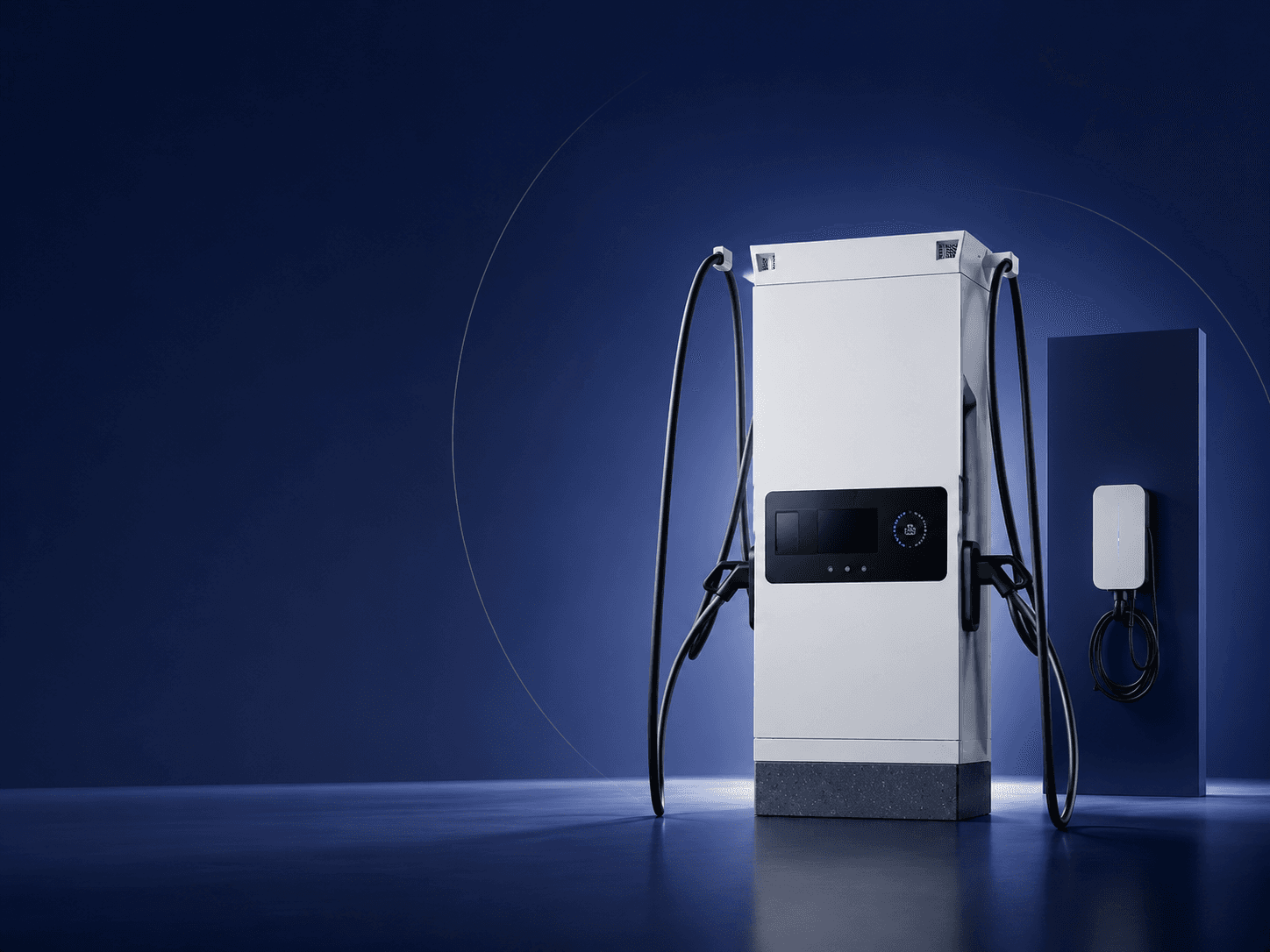
Slow AC or fast DC charging?
With AC charging, the current runs through the car’s onboard charger — hence the speed limit. A DC station converts the current internally and sends it straight to the battery, bypassing that bottleneck.
AC charging — wall-box
The station delivers alternating current; conversion to DC happens in the car’s onboard charger, which caps the power (usually 7–22 kW).
DC charging — fast station
Conversion happens in the station, which sends direct current straight to the battery. It bypasses the onboard charger and reaches 30 to 720 kW.
What VistaVerde stations offer
How long a charge takes, by power level
Charging time drops dramatically with station power. AC is ideal overnight or during the workday; DC fills the battery in minutes, for cars in transit.
From a full night to a coffee break — station power decides.
Indicative values for a 60 kWh battery, 20 → 80% charge. Real times depend on the car, its charging curve, temperature and the battery level on arrival.
Three families, from wall-box to ultra-fast hub
The same platform, in three power classes. Choose based on location, number of cars and the desired charging speed.
Specifications and standards
All stations use standard connectors and protocols, compatible with the vehicles and platforms on the market. Power and connector count differ by model.
Source: SUNNIC / BR Solar datasheets and the VistaVerde price list (May 2026). Full PDF documentation available on request.
Which station do I choose for my site?
Choose based on location, how many cars charge at once and the speed you need.
For an accurate quote, send us the location, the number of cars charging at once, the available electrical power and the desired payment mode. We run the assessment, size the stations and give you a turnkey quote — including installation and software.