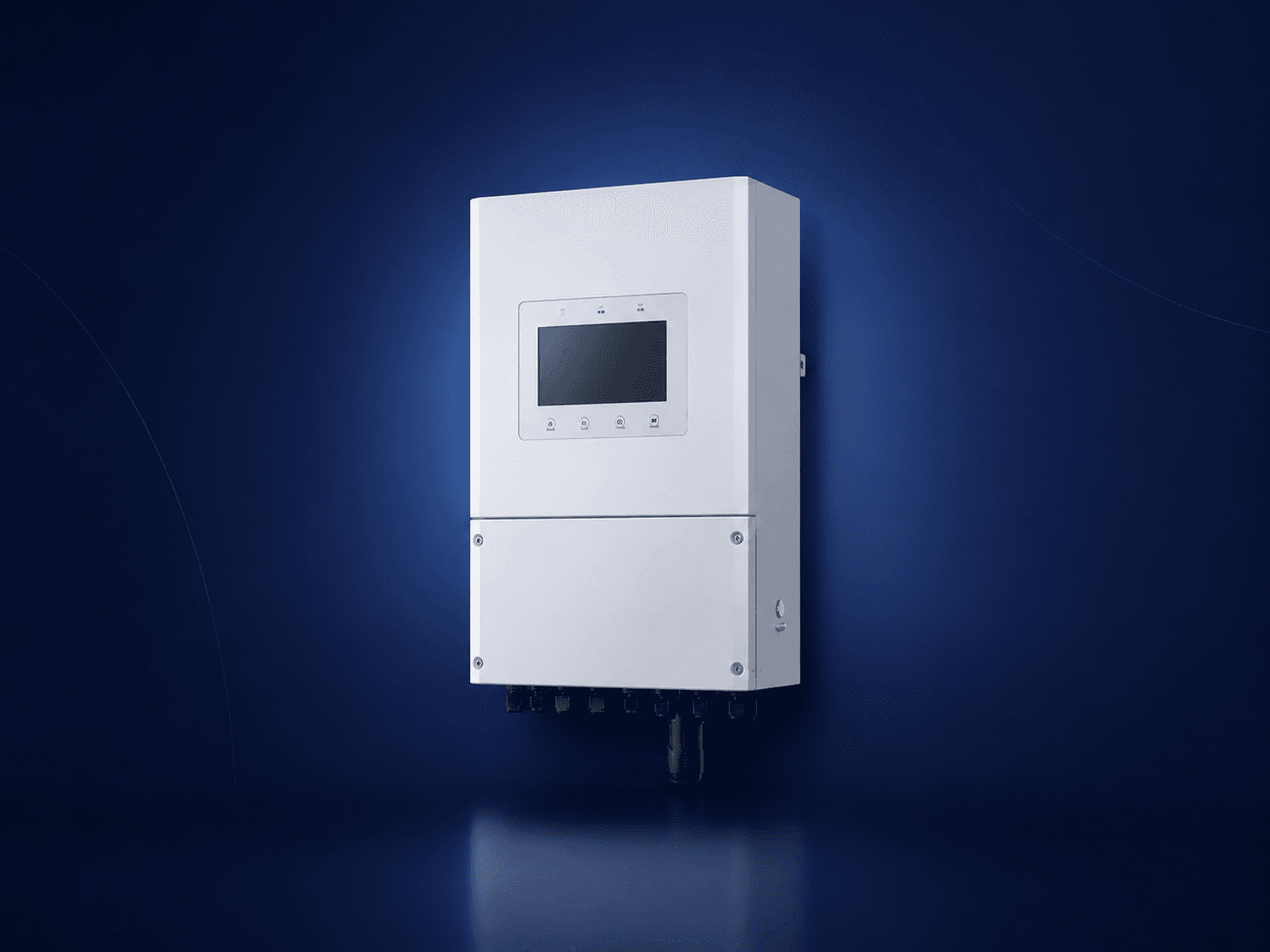
Which inverter type fits you?
The difference is not power, but the relationship with the grid. An off-grid inverter works in isolation; a hybrid one combines the grid, panels and battery — with automatic backup during outages.
Isolated system, no grid
The inverter powers the home directly from panels and battery. It does not depend on the grid and does not inject surplus — the energy you produce stays 100% yours.
Grid-connected + battery
Combines grid, panels and battery. It maximizes self-consumption, injects the surplus and switches automatically to the battery during outages.
Why the inverter matters
How the inverter optimizes home consumption
Panels produce the most at midday, but the home consumes the most in the morning and evening. The hybrid inverter moves energy where it is needed, hour by hour.
During the day you consume directly from the panels and charge the battery with the surplus; in the evening and at night you use the battery, drawing only the bare minimum from the grid.
Illustrative example of a sunny day; real curves depend on consumption, system size, season and panel orientation.
Three inverters, from off-grid to three-phase hybrid
All compatible with 48 V LiFePO4 batteries (including the BRLV series) and sized to your consumption and panels.
Full technical specifications
Official data from BR Solar and Solis datasheets — open the model you are interested in.
Source: BR Solar (BR-HSI 5000AP, BR-SPI 10K-SP), Solis datasheets and VistaVerde's quote. Full PDF documentation available on request.
Which inverter do I choose for my project?
The choice depends on the grid connection, system power and phase type.
In a hybrid kit you get the inverter, battery, installation and commissioning in a single offer — with a final price agreed before the start.